

Collection & recycling
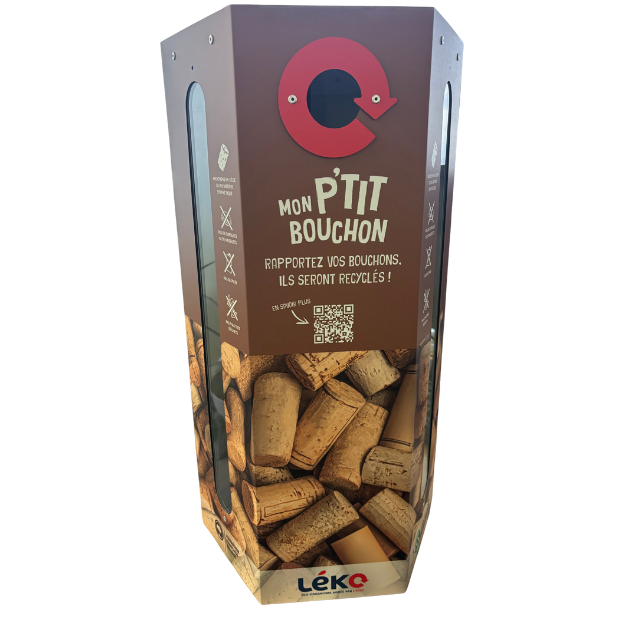
My little cork
What happens to them after their collection?
Every year in France, millions of bottles of wine, champagne, cider, beer and spirits are consumed. consumed. But what to do with the corks once the bottles have been opened? Bring them to our dedicated collection points!
Once collected, the corks are sent to specialist companies for sorting and recycling.
Discover the recycling process, which varies according to the type of cork: natural or synthetic.
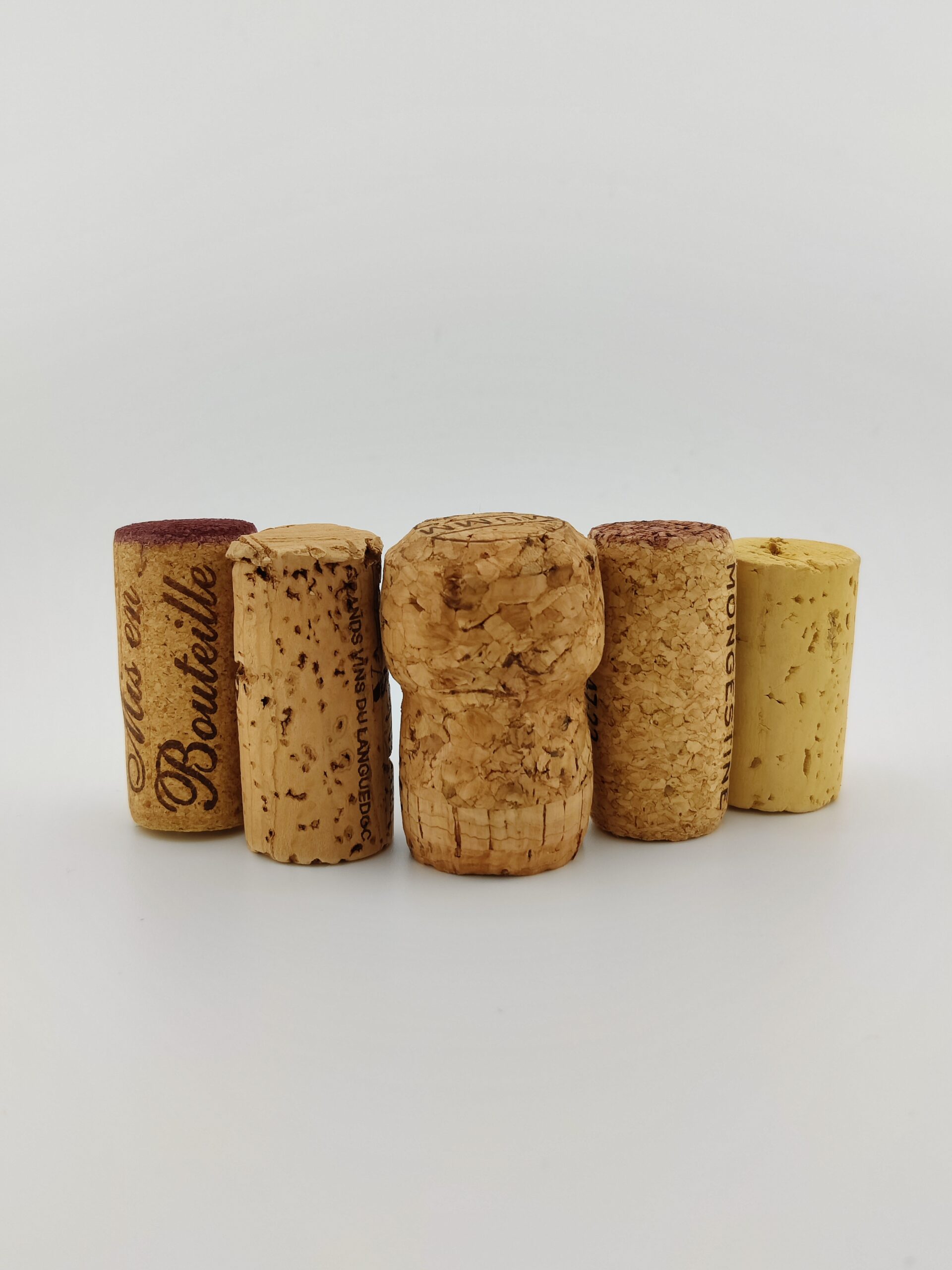
Cork stoppers
Step 1: Sorting
The corks collected are first sorted by hand to remove those that are too stained or soiled.
Step 2: Grinding
They are granulated and mixed with other cork waste from industry.
Stage 3: Valuation
For health reasons, these pellets cannot be returned to the cork industry. However, they are used to manufacture :
- from shoe soles,
- from floor coverings (tiles, parquet),
- forthermal and acoustic insulation,
- or design objects (furniture, home decor)
👉 Nothing is wasted: cork is a 100% natural, recyclable and sustainable material!
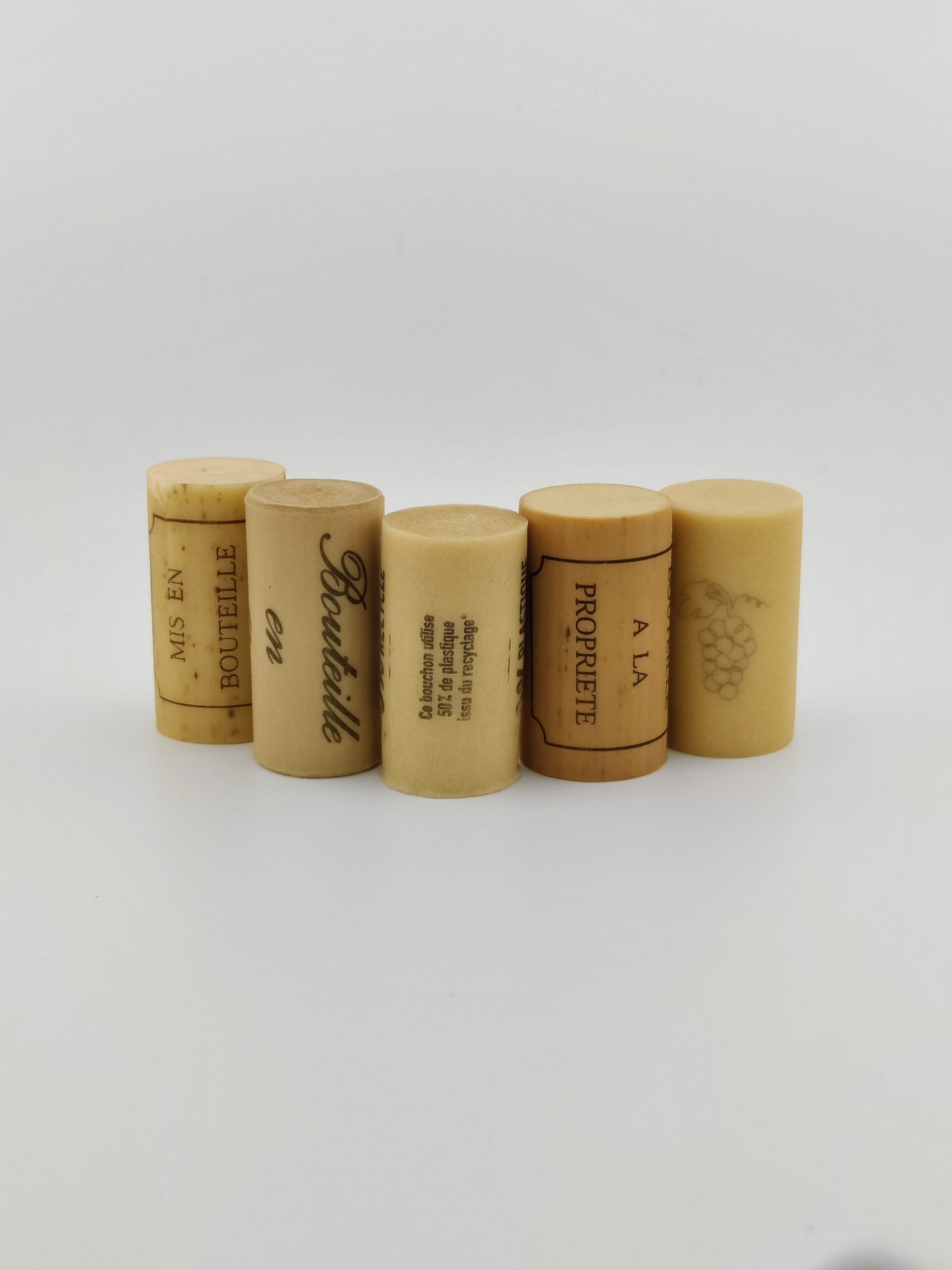
Synthetic closures
In contrast to natural cork, synthetic cork stoppers synthetic are made from polymers, mainly polyethylene. This material is derived from petroleum, but can also be produced from renewable resourcessuch as sugar cane.
Polyethylene is very popular for this type of use because it is light, flexible, neutral in taste and moisture-resistant. This means that wine can be preserved without the risk of spoilage.
These plugs can be :
- molded from a single blockgiving them a uniform appearance,
- or extruded (made from expanded polymer beads welded together), giving them a texture closer to natural cork.
In terms of the environment, even if they are made of plastic, more and more companies are developing synthetic corks from bio-sourced materials and above all recyclableto limit their ecological impact.
Like corks, synthetic corks can't be returned to their original state for health reasons, but they can become other objects!
Step 1: Sorting
The corks collected are first sorted by hand to remove those that are too stained or soiled.
Step 2: Grinding
They are reduced to coarse plastic shavings.
Step 3 :
- GranulationPlastic is heated, extruded into "spaghetti" and then cut into small granules.
OR
- PowderingIn some cases, plastic is crushed into powder for applications requiring lower heat levels, or to be alloyed with other materials.
Step 4 : Recycling and manufacturing
Recycled plastic granules or powders are used by manufacturers and craftsmen in their activities, making these corks part of a genuine circular economy.
It is therefore essential to collect them so that they can be put to good use again, rather than ending up being incinerated or landfilled.
Subscribe
to our newsletter:
to our newsletter: